
The Difference Between Law and Justice
Wolf HallThis thread traces Cromwell’s belief in law’s practical usefulness and the moments when law becomes a tool for power rather than fairness.
increasing Bearing strength in each event
 decreasing
Bearing strength in each eventdecreasingThe Lawyer’s Promise
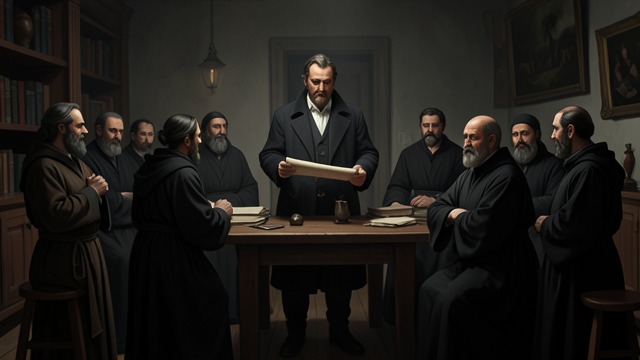
Law as a Way Out
Practical justice
Cromwell builds a legal practice resolving disputes and clarifying tangled property claims. He values swift decisions that can leave both parties better off than a prolonged lawsuit.
Law and self-interest
He knows that people read statutes through their own needs. A workable agreement matters more to him than abstract purity, but he does not yet control the laws he interprets.
Statutes for the Crown
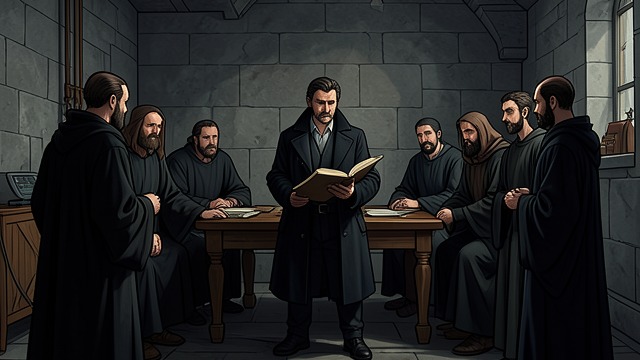
The Law Remade
New jurisdiction
Cromwell drafts laws that transfer ecclesiastical authority to the king and define succession. He argues that Parliament can express the will of the realm and legislate within its jurisdiction.
Clarification or coercion
He describes the laws as clarifications, but understands that they alter the consequences of speech and belief. The legal system becomes an instrument of political transformation.
The Trial of More
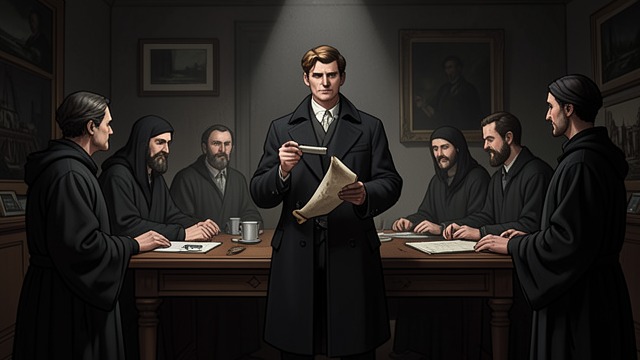
Law at the Edge
Evidence and interpretation
The case against More depends on how his words to Richard Riche are understood. Cromwell weighs the legal argument, the witness’s credibility, and the jury’s likely response.
Justice compromised
The trial uses procedure to reach a political result. Cromwell believes the king’s jurisdiction must prevail, while recognizing that the law may not resolve the moral disagreement beneath it.
Before 1527
1532–1534
July 1535
